


Knowledge Center
October 27, 2021
How to Track Loaner Surgical Instrument Trays
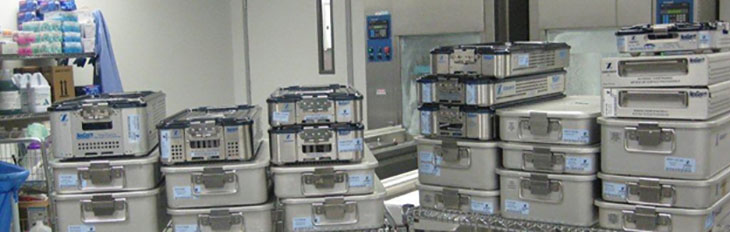
Loaned surgical instrument trays are practically unavoidable and offer healthcare facilities access to a wider variety of instruments and surgical devices. These loaner trays are often needed for specialized procedures, such as spinal or total joint replacements, or for new and uncommon procedures that are not performed often enough to invest in owning these often expensive sets. When a facility has limited storage or a sudden increase in procedure volume, they may need to request surgical instrument loaner sets to meet the demands of the cases scheduled. Using the LS:360™ Loaner Solution as part of your SPM instrument tracking system simplifies this process and keeps everyone informed through the loaner process.
What are Loaned Surgical Instruments?
Loaned instruments, or loaner trays, are any devices not owned and stored by the healthcare facility. Instead, these devices are usually loaned by the device manufacture to hospitals to use for specific procedures. Once received the hospital is responsible for cleaning, decontaminating, and sterilizing devices and must follow all facility policies and procedures as if they were any other device coming into decontamination.
Challenges with Loaned Instruments
Tracking these surgical instruments can be challenging and often there is a communication gap due to poor visibility throughout the process. The most common questions asked based on challenges with loaned instruments are:
- Once the case is scheduled, which vendor has the needed tray and how is the vendor notified?
- Do both the operating room (OR) and the sterile processing department (SPD) know which cases need loaners, which trays are needed, and when they are being delivered?
- How soon before the case should the vendor drop off the tray and how will compliance be tracked?
- How are Instructions for Use (IFUs) and count sheets provided to the SPD for reprocessing?
- During pre-procedure setup, can OR staff confirm loaner trays will be delivered on-time and fit for use?
- How are vendors informed that trays are ready for pickup post-procedure?
- When loaners are picked up, how is the SPD alerted?
Using a tracking system, or instrument management system, can help address many of these issues by adding full visibility throughout the process. Below is a typical loaner tray process, with a tracking system such as SPM with LS:360.
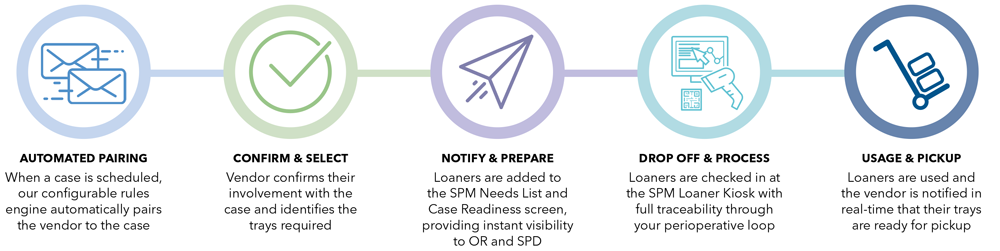
| Without LS:360 | LS:360 SPM Loaner Solution helps by: |
|---|---|
|
|
Since loaned instrument trays are not part of your normal inventory, it’s understandable that tracking and managing these while communicating with multiple third-party vendors and the OR can pose a challenge for any sterile processing department. As these devices are often needed for proper inventory control and cost management, using an instrument tracking and management software solution like SPM with LS:360 can help both the OR and the SPD deliver the highest quality patient care.

| FOLLOW US | |
|---|---|
 20,400 FOLLOWERS
|

|
 8,600 FANS
|

|
 4,000 SUBSCRIBERS
|

|
 2,700 FOLLOWERS
|

|