

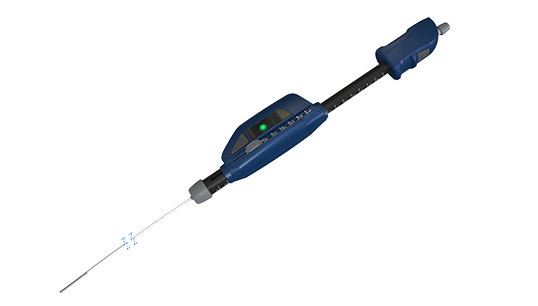
Precision-GI™ EUS Motorized Biopsy Device (20GA)
- Longer Cores. Less Fragments: Precision-GI is a motorized EUS Biopsy Device that uses rotational cutting and a flexible PTFE‑coated nitinol design to consistently capture larger, cleaner core samples—even in tortuous anatomy
- Fewer Passes. Faster Procedures: With fewer passes and minimal actuation, the PRECISION‑GI EUS Motorized Biopsy Device delivers diagnostic‑quality samples while providing consistent, reproducible EUS‑FNB results across operators and lesion types
- Less Blood. High Quality Tissue: The device is designed for effective tissue acquisition across a broad range of lesion types and anatomical targets. Its performance supports cleaner samples with reduced blood contamination.
Product Overview
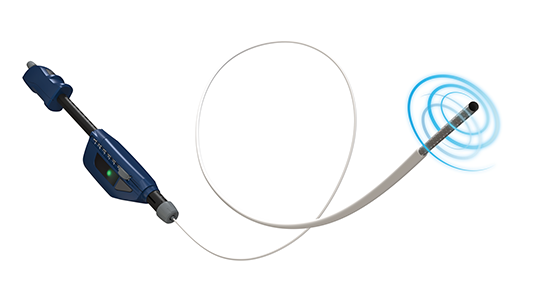
The Precision-GI EUS Motorized Biopsy Device is a 20-gauge EUS-FNB device that enables the capture of longer, wider, less contaminated core samples. By combining consistent cutting performance with a highly flexible design, the system supports efficient procedures and reliable diagnostic-quality tissue for histopathological and molecular analysis.
How the Precision-GI EUS Motorized Biopsy Device Works
The Precision-GI EUS Motorized Biopsy Device uses a motorized rotational cutting mechanism to deliver controlled, uniform tissue acquisition during EUS guided biopsy procedures. This mechanism enables the capture of intact, voluminous core samples while minimizing tissue disruption and unnecessary blood contamination. Its highly flexible nitinol construction is engineered to maintain performance in tortuous anatomy, supporting smooth advancement and consistent sampling. Together, these design elements help achieve diagnostic-quality tissue with fewer passes and minimal actuation.
Why the Precision-GI EUS Motorized Biopsy Device?
Precision-GI EUS Motorized Biopsy Device helps standardize EUS FNB outcomes by reducing reliance on individual technique and delivering consistent sample quality across users and lesion types. By enabling fewer passes, faster procedures, and cleaner tissue samples, the system supports greater procedural efficiency and confidence—especially in complex or challenging cases. The result is more predictable performance, clearer pathology, and faster clinical decision-making for improved patient care.

|
BROCHURE
|
|
|---|---|
| Document # | Document Title |
| NEW AND FEATURED BROCHURE - US (EN) | |

|
SELL SHEET
|
|
|---|---|
| Document # | Document Title |
| PRECISION-GI MOTORIZED BIOPSY DEVICE SPEC SHEET (EN) | |
|
INSTRUCTIONS FOR USE
|
|
|---|---|
| Document # | Document Title |
| PRECISION-GI MOTORIZED BIOPSY DEVICE - IFU (EN) | |